
I’ve got to stop watching the Christmas adverts on TV. John Lewis started it all, with the bear in his cave being woken up by Lily Allen, and it’s snowballed (to use a festive metaphor) from there. It’s the Sainsbury’s one that gets me the most – the three pyjama’d children recording a video of themselves singing the 12 Days of Christmas to their father, off serving in Afghanistan, only for him to burst through the living room door around about the seven swans a swimming stage (everyone gets lost at that point) to mass hysteria. Gets me every time.
Then you have the Tesco ad, in which a disconcertingly familiar family goes through the whole ‘circle of life’ in one-and-a-half minutes, arguing over Brussels Sprouts and forcing the awkward-looking kid into dancing around the kitchen.
The Boots ad is more nauseating, and significantly less plausible than a hare giving a bear an alarm clock. It features a ‘hug a hoodie’ off out to deliver presents to his teacher, a fit girl in his class, and a nurse. In what version of modern Britain does Boots think any teacher who values his pot plants would be fool enough to let his students know where he lives?
I quite like the KFC advert, especially the full-length version that lasts an entire advert break and must cost a fortune to air. Do that many people really pay a visit to the Colonel for a festive portion of chicken wings and ‘slaw? I suppose they must.
If the retailers aren’t pulling at our heart strings they’re trying to tempt our taste buds. However, I’ve yet to see a single food product advertised from the likes of Asda, Morrisons, Iceland – even M&S – that looks tasty. God only knows what Asda have basted that beef joint in to make it shine so much – Ronseal garden fence varnish? It certainly looks weather proof – but it’s not inspiring much salivating in these parts. As for Iceland, with its ‘fish, chip and mushy pea stacks’ – it’s no coincidence that this supermarket chain sponsors ‘I’m a celebrity, get me out of here’, and quite possibly supplies the food for its bushtucker trials.
Do people change their opinion of what constitutes ‘food’ come the winter solstice? Is it just that there is so little natural daylight around this time of year that we can’t see what we’re putting in our mouths? It’s quite frightening. If a team of set designers, product artists and C list celebrities can’t make this food look good, what hope will it have when it’s dispensed on to last year’s paper plates by your harried and harassed Auntie Gloria, having been extracted from underneath the weight of the turkey in the depths of the chest freezer? You know it won’t just be the peas that are mushy.
The joy (if there is one) of consuming Christmas food is knowing when to start and stop. Any earlier than about the 16th and, come Christmas Day, you’ll be sick of the sight of anything with the words ‘puff’, ‘dusted’ or ‘spice’ in the title. If you continue past the 29th you’ll forget ‘normal’ food exists, and be incensed when sausages appear without bacon wrapped around them, and mildly surprised that dinner can be served in individual portions, with functional eating implements, rather than perched on the end of a sofa, troughing from a silver foil platter via a cocktail stick. And all hope of getting into your New Year ’s Eve party frock is lost if you leave it any later.
I do genuinely like Christmas, the food and the gifts, even the shopping if experienced in moderation, but the adverts are starting to grate. Maybe it’s this year’s trend of using ‘normal’ pop songs instead of traditional Christmas tunes (I was heartily sick of the Johnny L song almost a decade ago, and Lily’s version hasn’t endeared it to me any further) that has done it. Or maybe it’s all the models’ collective ability to mysteriously shed clothes whilst advertising a particular retailer’s winter ‘range’ (suitable for the weather conditions that lingerie is not). But really, I think my main problem is that I’m distressed to find the ad men can so easily penetrate my fragile, melting heart, and in the space of 90 seconds and some cheap ‘crowd-sourced’ footage, reduce me to a snivelling wreck of sentimental Christmas sobs on my John Lewis sofa. I’m off to retreat to my cave for the duration – if anyone buys me an alarm clock I will not be amused!

The husband has been busy these past few weeks, creating a new bathroom on Freya, which is now almost finished. It has taps, and switches, tiles and trim; a working toilet, hot and cold running water, and absolutely no hand pumps. It’s heaven.
It replaces our old bathroom, a rickety three-sided structure made of chipboard that wobbled precariously every time we shut the door, and has borne an uncanny resemblance to a public toilet stall ever since we raised the roof of the boat, revealing six inches of air space above the walls. When we first bought the boat, from a seven-foot Dutchman called Jacques, the bathroom door function was fulfilled by a green tie dye sarong, and the hot water for the hip bath was fed by a piece of hosepipe from the kitchen sink. The hip bath had the exact dimensions to fool you into thinking it might be quite comfortable for a quick soak, but in actual fact proved more useful as a place to store dirty crockery until it was time to do the washing up.
It was helpfully positioned opposite the dining table, so that you could continue your dinner conversation without interruption whilst one of your guests went to pee.
Amazingly, given all the above, we decided changing the bathroom wasn’t a priority when we first moved in, so five years later it still stood (precariously), and we worked around its foibles, always being ready with the radio turned up to maximum when someone needed to venture in.
However, the worst thing about our old bathroom was the handpumps. Imagine you’ve just had a lovely relaxing bath (we had to imagine, so so should you), have just got all clean and dry and are about to settle down by the fire when you remember the water won’t drain out by itself. Boats are funny old things, spending their entire lives half-submerged in water, so that anything below about knee height is under the water line. A plug and gravity won’t do the trick here, and will more likely turn the entire boat into a (admittedly, fairly luxurious) bath itself. Instead, we have an intricate system of pumps and pulleys, and interesting things like ‘skin fittings’, which are not as exciting as they sound, but rather just another component of a gurgling, rattling, rusting system that I try not to think too hard about.
On Freya, if you want to get water in or out of the boat you must use a pump, and in the bathroom these were all operated by hand. A full bath constituted 250 energetic strokes. A decent sized jobby, about 45. My arm muscles (and subsequent prowess in more than one drunken arm-wrestling competition) have strengthened enormously over the past few years, due in no small part to this energy-intensive system.
The toilet system in particular baffled friends and family, to the point where they stopped coming to visit, or at least didn’t eat or drink anything when they stayed. A bi-annual event would be Ben stripping the bog to its barest components, donning an industrial bin bag over his arm, and going for a rummage in the toilet bowl, muttering “Who’s put a sodding tampon down here this time?” I remember fondly the time this happened on his birthday.
The new bathroom has no such pumps. To complete your ablutions now all is required is the touch of two buttons. Two buttons! Electricity is involved, a marvellous invention that means it is now possible to walk away upon closing the toilet lid, instead of having to pump endlessly, swirling sights no civilised person was ever meant to see, down the toilet bowl. It’s a modern marvel.
Friends we haven’t seen for years are now slowly renewing their friendships, having heard a rumour it is now possible to visit without worrying what they ate the night before. It is also the only room in the boat with a proper electric light, instead of the mix of LED strips, fairy lights, desk lamps and candles that illuminate the rest of the boat. I can’t get Ben out of it.
We still don’t have a functioning door, but the position of the bathroom means that you now have to shout to continue the conversation. We should probably get out of that habit.
So this is my public thanks to Ben for creating such a lovely bathroom. It may be the littlest room, but it’s made a big difference to our lives. Although I will no longer reign supreme as an arm wrestling champion, I think the sacrifice is worth it. Now if you’ll excuse me…
It was as I was staring at myself in the police station’s CCTV screen that I realised the extent to which I felt like a common criminal. In that tiny camera screen I saw a woman in a hoodie, holding a piece of paper, looking pissed off. I saw myself as the PC behind the desk saw me – one of thousands of people every year caught doing something wrong, and paying the price.
In my case the price was a hefty £300 fine and a wincing six points on my driver’s licence. To me, a woman who doesn’t even throw her chewing gum on the ground for fear of being considered littering, this was a hard pill to swallow.
A little background. My husband and I bought a new (to us) car a couple of months ago, swapped our insurance, and thought no more of it. It seems our insurance lapsed, and for a month we drove around illegally, having no idea that we were doing so. Today, on our way home from a long weekend in Norfolk, a police car blipped his siren and pulled us over. Evidently having a guilty conscience, I puzzled briefly over the things I may have been doing wrong. I was stunned when he informed us that his clever computer had told him we were driving uninsured. A phone call confirmed this to be the case, and moments later I was relinquishing my driver’s licence, filling in a lengthy form, and mentally rehearsing the earful I was going to give Ben when it could be proved it was all his fault.
Luckily for us, the insurance company agreed to renew our policy on the spot, which meant we wouldn’t have to have the car impounded. (This was actually luckier for the police – we had a lot of dirty washing in that car, and half of Wells beach.)
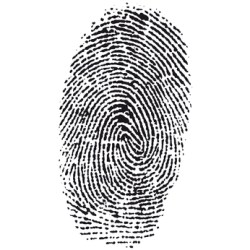
Unluckily for us, we were guilty as charged and now had to face the consequences. Later that afternoon I would be £300 poorer and six penalty points richer, and feeling like I would be asked for fingerprints and some sort of sample.
The policeman himself was very nice, explaining exactly what we had to do. Of course I didn’t hear a word, and when I dutifully arrived at the police station of my choosing later that day (I am a law-abiding citizen!) I realised I had not brought the requisite documents.
The female police officer behind the counter looked me up and down, the way she must have done hundreds before me, and told me she could either rip up the form she had so painstakingly been filling in, until I came back with a valid insurance document, or I could pay a fine for failure to produce the correct documentation.
Up until this point, I had been feeling a number of different emotions – aggrieved, embarrassed, foolish, poor. Now I got angry. I had seven days to roll up to my local police station with my policy document. I had arrived seven hours after the initial notice had been given to me, and was being threatened with another fine. But because I am a law-abiding citizen, I meekly apologised, asked her to destroy the form, and said I would return.
Two hours later and I’m looking at the video surveillance monitor, and handing over my licence for a third time. A different Police Officer now decides it’s time to ensure I fully get the message – that I’m extremely fortunate my car wasn’t taken off me, that he hopes I’ve fully learnt my lesson, and that I had better pay my fine within the allotted time, or I would be faced with further penalties. Taking into account the warning I had read upon parking my car (thankfully, still my car) at the Council offices that if I did not return within 30 minutes, they would be giving it away in the Christmas raffle, this was the third threat of a fine I had been offered within a single afternoon.
What was going on here?
I know there are a million uninsured drivers on Britain’s roads today. I understand they cost the taxpayer a fortune and are a menace to society. I fully get the fact we were in the wrong – it’s our responsibility to tax, insure and service our car, and a missed reminder is no excuse. It’s a fair cop. I’ll pay the money, take the points, and sulk for a few miles, and then feel grateful that we didn’t find out about our error having just had an accident.
What I object to is being made to feel like a criminal for what was a genuine and honest mistake. Lectures and threats of fines, being told repeatedly the consequences of our insurance company not being so kind as to accept our money; it seemed every single person involved in this long drawn-out transaction of guilt was hell-bent on reminding me what a terrible human being I was. Of course, I’m sure they see examples of people taking the piss every day, getting away with driving a car without insurance for years, and not giving a monkeys when they’re caught. A £300 fine isn’t a bad premium for years of insurance-free motoring.
But that’s not me, and these cold, uncompassionate form-fillers have made me realise that the average British citizen is only one hazy attention-span (maybe I received my monthly copy of Delicious in the same post as the insurance renewal) away from the icy stares and well-practised speeches of self-righteous and disassociated policy and procedure. Living in a culture of paranoia and fear of fines doesn’t help anybody. Being made to feel like a criminal is greater punishment than any fine or points on a licence. And the CCTV camera really showed up my grey hairs.
This week at work we went on a one-day ‘Camp’, the official mission statement for which was to ‘be bold’. Our company is going through a period of transition at the moment, potentially growing into new markets, and the day was part team-building, part knowledge-transfer, and began with an early-morning journey up the motorway to a lovely old manor house in the Leicestershire countryside, just a few miles from where I was born.
We were put into teams and asked to come up with Halloween-inspired names (we chose Ghoulies, but the way I spelt it made it rather more childish), and I found myself in a team with the Head of HR, and a colleague who is quite new, who I hadn’t really spoken to before. The teams were apparently chosen by a convoluted system of characters attributes, on a closely-guarded list, and thus one of us was deemed to be a strategist, one a doer, and one competitive. Of course, we all wanted to know who was who. “I’m not sure I’m particularly competitive,” I said doubtfully, as all the other teams raced to start the orienteering, and I went for a second cup of tea. “I guess maybe I’m strategic, but then, everyone thinks they’re strategic.”
“Maybe you’re the doer,” said Connor, the new boy. I looked at him, stirring my tea. “Maybe not.”
The bridge-building didn’t go well. We were supplied with eight lengths of wooden pole and some muddy string, and told we had 20 minutes to traverse a 10 foot stream. The longest pole was eight feet, and pole vaulting was apparently not an option. You would think, given I live on a boat, that I would be able to tie knots, but you would be wrong. “If you can’t tie knots, tie lots,” said the helpful camp leader. We did that – but it didn’t work. What we ended up with, rather than a ten foot bridge, was a nine foot raft. Some quick adjustments later, and we had a ten foot tangle of poles and rope, and two grinning teams ready with cameras to watch us fall in. Much to their disappointment, two-thirds of us crossed successfully (including, amazingly, me), but our pride was dented and our boots a little damp.
The orienteering wasn’t much better. We are not natural cheats, so it took us a while to realise we should use the technology available to us, and take photos of the map, and the clues we had to find. Synchronising watches may have worked as well, as I came in a minute late and points were deducted. I was having my doubts about being the strategist.
Goal ball was next, in which the teams are blindfolded, and have to roll/throw the ball (with bells inside) into their opponents’ net. A head, chest and ‘area’ injury later, plus a series of carpet burns, and an argument with the ref, and we were on to our final activity of the morning. This was the biggie – it involved harnesses, crates, and heights.
I always forget I am a little bit frightened of heights. I watched the team before us fare quite well – the object was to stack beer crates as high as you could, whilst standing on them, and not fall off. They got to about nine layers before the whole thing crashed spectacularly – and put the fear of God in me. I knew I would be in a harness, strapped up quite safe, but just as I have an illogical fear of flying, and spiders (not to mention flying spiders), the thought of falling off a stack of wobbly crates 20 feet in the air, in front of laughing colleagues, made me start to feel a bit iffy. The bravado that had made me put myself forward as one of the climbers, instead of the sensible stacking option, was definitely wearing off. I could safely tick ‘Doer’ off the list.
Our turn came. Upon the advice of the instructor (who clearly felt sorry for us after the bridge-building incident, and who wanted to get to lunch on time), we stacked the crates to six-high, and then constructed a staircase to help us get to the top. We were already in the lead, and still had half our time left to build up the layers. I started to walk up the staircase – so far so good – until I got to the top. It was windy. I suddenly felt very exposed. My colleagues, who were supposed to be holding the rope to which I was harnessed, were chatting (chatting!), seemingly unaware they had my life in their hands.
Frozen with fear, and not having a clue what to do, I was rescued by my other team mate, Suzanne, who briskly and efficiently put me where I needed to be and set about constructing the layers. She has kids, she knows what she’s doing. Helpless, I did what I was told, and tried not to look down. The crates wobbled constantly, the wind buffeted us from all angles, and it suddenly became almost impossible to carry out simple bodily functions, such as balancing and breathing, at the same time. I saw it coming before anyone else did, knew we were about to fall, and braced myself for the broken limbs, flashing lights and sirens.
They say that when you experience something frightening, it happens in slow motion. This was the case – but purely because it did actually happen slowly. Barely had my weight shifted from the crates than I was suspended in the air, Suzanne and I gently pirouetting around each other, bumping off crates, until we staggered to the ground. Crates lay in carnage around us – and the clock was ticking. Right. Start again.
Within seconds our staircase was back in place, and a few moments later I was racing up it again. It was no less frightening, but now I was bloody-minded. I wasn’t going to go through all that for nothing – the first team had managed ten layers, so it was 11 or bust. Up we went, clinging to each other for dear life, Connor throwing up crates and Suzanne deftly stacking them. I was doing a commendable job of ‘the third member of the team’, and we were soon on ten layers. One more was needed – with 30 seconds to go.
And here was the catch – if you fell, and your tower collapsed, you only got points for the layers still standing. We would be risking it all. “What do you think?” said Suzanne, “shall we go for another one?”
“You mentalists!” shouted one of the other teams. “Just keep still and take the points.”
“Let’s do it,” I said, and manhandled my leg into the stepping position. Seconds later (and I think our instructor was generous with the timer) and we had got to eleven, wobbling like Weebles on one stack each as the others had crashed to the ground. Victory!
And thus, as I reluctantly abandoned my perch for the second time, and dangled helplessly in the air (narrowly avoiding a wooden pillar, but crashing full tilt into the remaining stack of crates – I have a bruise), I discovered that I have a lot more competitiveness in me than I first thought, and the ethos of ‘being bold’ is one I could quite happily adapt to.
I had achy legs for two days afterwards, muddy water stains on my leather boots, and a substantial hangover the next day (victory requires spoils), but I came away from Camp feeling like I achieved something. Whether I was categorised as a strategist, doer or competitive beforehand doesn’t really matter. Although, of course it does – and I will find that list. 🙂
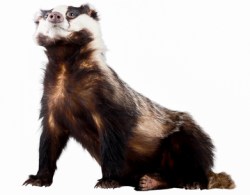
For sale: four mirrors, of varying shape and size. Free to a good home. Buyer collects, or if that’s inconvenient I’ll bring them round. Whatever – I need rid. This evening, sat minding my own business, I looked up and realised I had to take drastic action against a particularly offensive combination – a bright lightbulb and a mirror at eye level. Staring back at me was my exact double, except she had a badger on her head, so extreme was the streak of bright white hair emerging from my crown.
I’ve been a little negligent with the plucking of late (I’ve noticed the odd one in the mirror in the lift at work and so have resorted to using the stairs), and also taken to heart the tale that if you pluck one, two grow in its place. But this level of stealth, this ninja-esque attack of silver hairs, is quite unprecedented, and wholly unfair.
I blame my mother. Since I’ve been old enough to remember (my memory’s shaky, so I’m placing her at around age 40), she’s had pure silver hair, a cloud of snow, a meringue of light. (I’m being poetic, but I do quite like it – besides, I know she’s reading this.) But I’m not 40! And as if it isn’t enough that my hair turns to the consistency of a brillo pad at the slightest spot of rain (it has been raining a LOT recently), it now seems that my follicles can’t even be bothered to pigment. Had enough of that brown malarkey, it’s time for fifty shades of grey. (With less spanking.)
They’re not always visible. In dim lighting (we have energy-saving bulbs, or at least we did until there was a deal on at Aldi) they’re barely visible, a silver sheen around a dark brown silhouette. They hide beneath the surface, lurking, waiting for the moment I decide upon a side parting, or a jaunty hair clip. Surprise! They scream, and then have a little party around my head, dodging the tweezers, and laughing merrily as I clumsily pull out seven brown to every one silver, a ratio that even with my quite considerable head of hair, is not sustainable.
It seems a laughably short period of time ago that I considered highlights, as I was bored of my uniform chestnut, a monotony I could quite happily go back to with minimal complaint.
Friends have suggested I dye it, but I’ve resisted up until now. The last time I attempted a (thankfully non-permanent) hair dye I got more on my Mum’s bathroom curtains than my head, and looked uncannily like Robert Smith without the makeup. Something tells me that, once you start you can never go back to what you had before, and it will mark a watershed of my youth. It’s easier to just get rid of the mirrors.
I suppose I will eventually get used to the change, and be more accepting. As my already fuzzy eyesight worsens my attention will be distracted from my hair, and when the Alzheimer’s kicks in I’ll forget what colour it was in the first place. For now, I’ll swap grooming tips with my Mum and ask her what else the Harrison genes have in store for me. And get ebaying those mirrors.

I find myself on a street corner, suddenly invisible to the naked eye. It’s not a new diet, or indeed a super power, and it’s only partially due to the blinding shaft of afternoon sunlight between the gothic towers of a Cambridge College that’s turning everything a bright vermillion. No, the reason I’m invisible this afternoon is because I’m handing out flyers.
It’s an experience everyone should try, as it perfectly epitomises the highs and lows of human nature. There are those who will greet the sight of an outstretched hand with a piece of paper in it with curiosity and grace, pleased to be given something interesting to look at. There are those who will cross over to the other side of the road, or suddenly find something fascinating to look at on their phone/ipod/underarm instead of the proffered piece of paper. And there are those who will look right through you, allowing your arm to bounce off their bodies soundlessly as they charge past, never breaking their stride or conversation. These people outnumber the others ten to one.
I pity people who are trying to extract money from others on the street – the charity workers, volunteers, and indeed, the homeless. If I can’t get people to take a free piece of paper, that is only exhorting people to have a good time, then what chance do people have of trying to convince perfect strangers to part with their cash?
We’ve all been there. You’re rushing for a train, laden with bags of shopping, and some cheery-faced do-gooder (generally blonde, female, young and on the lookout for hapless males) stops you as if asking for the time, and then extracts a clipboard from the depths of their person and tries to sign you up for three years at £7 a month to save the elephants. They use this amount as the seven times table is quite tricky, and you’re too distracted by the shopping and the time, and the relentless cheery disposition of said volunteer to argue very much. Somehow they extract email addresses, credit card details and national insurance numbers, and for the rest of your life you’re bombarded with emails showing you pictures of your rescue elephant in a birthday hat, and a small but significant direct debit that you always feel too guilty to cancel.
Never again, you think, and henceforth avoid making vague eye contact with anybody stood still in the street.
I’d been unprepared for the level of hostility I would meet on the crowded streets of Cambridge. I chose my targets carefully, didn’t approach anyone who looked stressed or harassed, or with children, or shopping. Generally it was crowds of pimple-ridden boys, clutching skateboards with hats on backwards, toting under-developed facial hair and mis-spelled clothing. There were LOTS, and all perfected that unnerving pretend-she-isn’t-there stare, which after a while had me patting myself down, and ensuring I hadn’t actually drifted off the plane of reality. I checked my reflection in my phone (no embarrassing biro marks on my face or spinach in my teeth), and constantly rotated my position so that I had full view of both TK Maxx and Superdrug (I had chosen my spot wisely), and wasn’t about to be mown down by an errant cyclist.
To no avail. After a little while, and with a hefty clutch of leaflets still in my paw, I decided to multi-task and did a little window shopping (Ok, actual shopping), and was then rescued by the welcome sight of my husband bearing aloft a paper cup of coffee and a sticky bun. But even he walked right past, feigning interest in the receipt until I tapped him smartly on the shoulder.
“Oh it’s you,” he said, visibly relieved. “I thought it was someone wanting to sell me something.”

I’m on a train, and have a major problem. Firstly, I need to wee (this isn’t unusual, but is impossible – I’ll tell you why in a moment). Secondly, and in an entirely modern-day quandary, I am completely without anything to do. My laptop has a dead battery (I’ve been working very hard), my phone’s last vestiges of power need to be saved for when I arrive at the train station and need to beg my husband to come and give me a lift home, preferably with some sustaining foodstuff that I can eat from a tray, with minimal social niceties. I have a blank piece of paper, an hour left to go, and in the absence of digital entertainment (and with the goal of trying to ignore my bladder), I’m allowing my brain and pen to choose a subject at random, and see where we end up.
I’ve been to Manchester for the day, for work, although really I should clarify that I spent approximately one hour and forty minutes in Manchester itself (ten minutes of which, perplexed in Sainsburys, trying to choose a sandwich), and seven and a half hours on a train, to and from.
You see all manner of life on a train. You can listen in to some great conversations too, as the seemingly intimate curved seats and tinted windows (this is quite a posh train), quickly make people forget they are on public transport, and you’re never more than about four feet (much like rats and Starbucks) from the next person. Writers have big ears, and I’d thoroughly recommend a long train journey to anyone suffering from a dearth of good storylines.
Admittedly, it’s more soap than opera, but today I’ve learnt what Stacey did to the woman she found her boyfriend messaging on Facebook, I’ve witnessed the next Super Nanny expertly disentangle two fractious toddlers intent on murdering each other through an inventive use of the refreshments trolley, as well as spied on a couple using the carriage toilet for a quite unintended purpose. To begin with I thought they were fare-dodging, as first one then the other slipped (virtually) unnoticed into the cubicle whilst the conductor went past. But they didn’t return for quite some time and then, a few stops further down the line, when all fares had been checked and paid for (including some stern words on mine – more later), they slipped off again. It couldn’t get any more clichéd if the guy had returned to his seat, zipping up his fly. I’ve thus crossed my legs and am waiting for my stop.
It’s dark now, or I’d be entertaining myself by looking out of the window. What you tend to forget, when you live in the Fens, is that there are these things called HILLS. They’re quite incredible – undulating monsters that appear out of nowhere (well, Grantham) and arrest the untrained eye with their vast and unexpected tapestry. The Fens are flat and sparsely wooded, you can see for miles, and there’s a definite line between earth and sky. In the winter you get huge snow-globe skies, a vast dome of crisp blue yonder, frozen ground and a watery sun, the vista stretching 360 degrees so you can almost see the curvature of the earth. Not so here, in the rich valleys and hills of the peak district, where sheep perch precariously on alarmingly vertical rockfaces, and rich green paddocks mimic storm-tossed waves as far as the eye can see. Which isn’t far, because there’s another bloody great hill in the way.
As much as I love the Fens, the odd hill wouldn’t go amiss. There are a couple of mounds, where children gather from miles around at the first hint of snow, and I do remember firmly believing there to be a significant gradient on my bike ride home from my Saturday job when I was thirteen, huffing and puffing my way up the road, having spent the last three hours inhaling feathers (and most likely asbestos fibres) at the local chicken farm. But at most it must have been about one-in-ten, unlike these geological bad boys, whose gradients would have even Bradley Wiggins gasping. (It’s ok, I’m not going to rant about Bradley Wiggins again. My brother has only now just started to speak to me, and that was only on the promise I would buy him a helmet wing mirror for his birthday. It’s in the post.)
I have another tip to Manchester planned in a couple of weeks, and I shall use the lessons I’ve learned from this journey to my advantage:
1. Firstly, I shall attempt to book my tickets when fully awake, so that I don’t accidentally purchase ones intended for the day after I travel. Imagine my indignation upon arriving at the seat I had booked, to find no tell-tale reservation ticket, and an old lady, festooned in knitting, sat in it. Making a mental note (ok, an actual note) to complain to East Midlands trains regarding their shoddy service, I was, upon arrival of the ticket inspector, most chagrined to realise my error. I’m just glad I didn’t actually tap my foot whilst waiting for the old lady to move.
2. I shall remember, and thus not be alarmed, that the train changes direction at Sheffield. I much prefer to face backwards on a train (I won’t get too psycho-analytical as to what it means that I prefer to look at where I’ve been rather than where I’m going), and so, whilst half-asleep, half-eating, I couldn’t quite work out why it was, upon leaving the station, I was suddenly facing forwards. Had I been moved? Had the knitting lady’s supporters (there were a few) physically picked me up and set me down on the other side of the table? Had I fallen asleep entirely and was now on my way back home? Puzzling.
3. I shall turn everything off between Grantham and Sheffield to enjoy the spectacular scenery. This will also help conserve my battery, which will in turn help with no.4 on my list…
4. I shall purchase new batteries for both my laptop and my phone. That way I’ll be entertained for the duration and won’t have to resort to blogging with a pen. Or, as it was formerly known, writing.
5. I’ll pee before I leave.
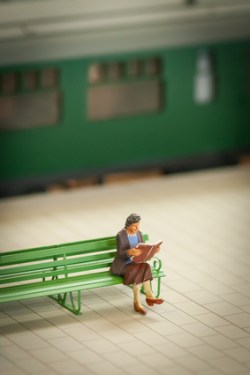
This week, I finally finished the book I’ve been reading for the past couple of months. Shantaram is an amazing novel, about an amazing man, and at 930 pages, has lasted me a good few weeks of twenty minute commutes on the train. My fellow passengers will breathe a sigh of relief, however, to know that I will no longer spontaneously burst into floods of tears, sigh dramatically, or indeed be so engrossed in what I’m reading that I am likely to miss my stop entirely (staring in perplexed wonder at an unfamiliar platform, confused as to why it’s so dark), or at least only realise I need to get off with about three seconds’ notice. This is their cue to help me stuff the Kleenex back into my bag, gather up my belongings and forcibly shove me, sniffling, off the train.
The book has been making me a tad… emotional. Avoiding spoilers, the guy had quite a life, and the book tells of his time in the Mumbai slums, at war in Afghanistan, months in prison and too many gun fights to mention. People die, a lot. Just when you get emotionally invested in a character, he gets shot or maimed or ends up in some gruesome traffic accident. Shantaram is betrayed by friends and lovers alike, succumbs to heroin addiction, and in short, gets pretty miserable. And I, during my twenty minute bursts of reading all this, get increasingly depressed and appalled and despondent, and wonder why I didn’t just stick with Game of Thrones. At least they take a break every now and then from the killing and maiming to introduce a couple of dragons to the plot, or a good joust.
So now I need some new reading material, that will put me in a happy frame of mind, ready to face the day, rather than a world of cholera and rats and the surefire certainty that a main character will die within the next paragraph. A romance perhaps (one that doesn’t end up with the love interest running off to Goa or marrying some rich dude called Jeet). Maybe an action adventure (as long as all the heroes survive the war they’ve helped fight, and don’t end up in a frozen cave for four months with only rancid goat meat as their final supper). I’ll steer clear of crime novels for the meantime, as I feel I’ve learned more about the counterfeit and smuggling business than is legally advisable, and likewise, the horror genre isn’t top of my list right now. Something lighthearted, preferably with fluffy animals, and large type.
I would of course thoroughly recommend Shantaram, particularly if you’re interested in India (although it’s kind of frightened me about going there!) or just like to get all your emotions bubbling up to the surface five minutes before your working day. And I hope I haven’t given away too many spoilers. Just don’t trust any of the characters, or expect them to last more than three chapters.
So if anyone has any suggestions for light, but engrossing, reading material, please do share. But for the sanity of my fellow Network Rail passengers, keep it cheery.
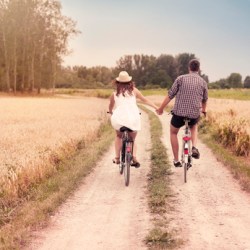
My husband has exhorted me to undertake a spot of dictation. We are in the car, on the way to my mother’s, and have recently narrowly avoided squishing two pink-lycra-clad ladies on pushbikes, who decided the ten-metre gap in front of our 60-mile-an-hour, two-tonne estate car, was their preferred choice of cycling space just a few moments ago. Now the swearing has died down, and I’ve unclenched the white-hot ball of knuckle that used to be my fingers from the handle of the passenger door, Ben has decided he should take out a full-page advert in The Times, to attract the attention of Mr Bradley Wiggins, and alert him to the damage he’s caused since his Tour de France and Olympic win last year.
“Dear Bradley,” he begins.
“Isn’t that a little informal?” I ask, meekly. (I do not wish to further inflame the husband’s ire, given that he has got back up to fifth gear in remarkably short order.)
“Dear Mr Wiggins,” he agrees.
“I think it’s Sir now,” I offer, but am won around by the excited way his hands flap around the wheel that he probably wouldn’t be upset by a lack of formality, on this occasion.
“Wiggo,” he begins again, and I do not stop him. “As much as I admire your sportsmanship, your athletic prowess, and your deftness with a razor, and as fully as I enjoyed the fleeting feeling of pride in my nation, and flush of success at beating the French at their own game… as much as I believe you are fully deserving of the BBC Sports Personality of the Year, and your hug from Weller – I would like to draw your attention to the subsequent menace you have inflicted on British society.
“I am of course talking about cycling.”
We slow for a speed camera, and I read back what he has written so far. “Very good,” I say. “Great opening. Precise. Attention grabbing. Enjoying your use of the word ‘menace’.”
“New paragraph. Yes, cycling. We all know the benefits of this form of transportation. It’s good exercise. It’s cheap, and quick. It’s ‘carbon neutral’.”
We swerve dangerously as both hands are taken from the wheel to emphasise the derision Ben places on those speech marks.
“It clears space on our roads, it gets fat people thinner, and if this country’s economy was based upon lycra, all our troubles would be over. But it has one definitive, overriding disadvantage, this cycling malarkey.” He pauses for dramatic effect.
“It means people are cycling – on the roads.”
I stop writing for a moment, pondering this choice of words, trying to decide if it’s the fact I’ve heard this argument too many times to count that is spoiling the overall effect – or if it’s the fact it makes no sense. I’m an editor. I have to raise the issue.
“Ben, your argument makes no sense.”
“It makes perfect sense! Ever since that bloke got on his bike, every man, woman and pensioner thinks cycling’s a great idea! They’ve squeezed themselves into decade-old lycra and now firmly believe that the nation’s highways are their own private cycle lanes! All that nonsense about never forgetting how to ride a bike – I don’t think so!! Some of these people, swerving in and out of traffic, jumping lights, taking up half the bloody road because they’re bored and want to have a bit of a chat – I seriously wonder if they even remember learning in the first place! Where’s their lane discipline? Where’s their hand signals? Why do they have to wear so much lycra? Is there a law against folds of material?”
I sense we’re on the brink of agitation, and with some miles to go before our destination (including, from memory, a number of junctions in which we’re likely to come into contact with cyclists – literally, if he carries on in this vein), I attempt soothing tones.
“I imagine the craze will soon die down, my love. It’s nearly the end of the summer and the bad weather will have them all back in their cars soon enough.”
It doesn’t work. The evidence is all around us (if aliens landed in Cambridgeshire they’d believe humans had two arms, two wheels, and came in luminous shades of orange and green), and whilst some of these cyclists might indeed be once-a-year-on-a-sunny-Sunday bikers, the ones with snap-in shoes, pedometers, and (oh my heavens) rearview mirrors on their helmets, show no sign of letting up any time soon.
“The serious cyclist,” mutters Ben under his breath darkly, shadowing a particularly sprightly looking pensioner on his aluminium frame, trying to ascertain if his glare is making its way through the man’s mirrored sunglasses. “Anyway, where was I?”
“I think you were asking why cycling didn’t lend itself to a more flattering outfit.”
“Ah yes. Indeed. That shade of pink those two ladies were wearing back there would have looked lovely smeared halfway across the road. I had no problems seeing them with their lights and reflectors and luminosity! Just a shame they couldn’t see the 13-foot long car with a very angry quarter-Welshman in it!”
“I think they saw you eventually,” I countered, recalling the 30 seconds of expletives that were hurled out of the driver’s window, the half-inch of tyre marks on the tarmac, and the worried looks of the children on the school bus. The quivering lower lips and wide-eyed stares of the two ladies on their bikes won’t leave my mind for a while either.
But he does have a point. Lycra aside, the road infrastructure in our particular county simply isn’t up for the dramatic increase in cyclists that the past 18 months has seen. Cambridge is famed for its bikes, and every tourist has a picturesque photo of some long-haired, satchel-toting, loose-breasted young undergraduate hurtling along its narrow cobbled streets on a push bike. The fact the Government has announced it will invest £8.2m for cycling in and around Cambridge over the next three years is great – as long as it’s focused on those roads that really need it.
The long Fen commuter roads, with single lanes and blind corners, need cordoned-off cycle routes and under- or over-passes, so that drivers aren’t forced to sit behind slow-moving cyclists where there isn’t room to get past, or to manoeuvre dangerously into oncoming traffic when they’re too impatient to wait. And cyclists using these roads should be forced to wear helmets, use lights and reflectors, and desist with those silly snap-in shoes that make them fall over at traffic lights. Actually, no. Let them keep those. It is very funny when they do that.
As for us, perhaps we should be a little more patient with our healthy, fashion-challenged friends. The fact they are choosing to exercise and save the planet at the same time is very commendable, and at least the trend for overgrown facial hair is dying down. As we pull into my mother’s driveway without further incident, I breathe a small sigh of relief. I’ve just read that a full-page ad in The Times costs £16K. Imagine how much lycra you could buy with that!

Today Ben and I are celebrating our ninth wedding anniversary, and the fact it is exactly 16 years since we first ‘got together’ – an auspicious occasion that involved a few pints of strongbow and a moonlit cruise on the back of a friend’s boat. I was just eighteen years old, and Ben a strapping 24; it was the summer that my friends and I celebrated the end of our A-Levels, where we’d partied in Ibiza, been to our first music festival (I have a vague recollection of telling Justine from Elastica that one day I would marry her boyfriend), pulled pints at a local pub for our cider money – and met a bunch of lads who lived on knackered old boats and who one day walked into said pub and asked us if we’d like to come see their kittens.
A ruse that worked, disarmingly so (my mother should have taught me better), and which led to Ben and I, after a series of false starts and exes who shall remain nameless, to finally exchange the first kiss that would herald a change in direction of both our lives. Over the next decade and a half we would get through four boats, nine cars, travel round Europe and across the world, be broke, be broken, live abroad, get a cat, bury a goldfish, and, most importantly, get married.
We were pretty much the first of our friends to do so, and even though we took a while (seven years) it never felt that long, or even occurred to us to do it any sooner. Incidentally, we chose the same date as the date we’d started to go out, as neither of us could be relied upon to remember two different anniversaries.
The proposal wasn’t exactly romantic. We were on holiday in Turkey, and sat in a beautiful garden restaurant, under lemon and orange trees. It was a popular restaurant, and busy, and we’d been asked to double up with another English couple, to save on space. I don’t remember their names, but I recall he was an antiques dealer, and throughout the meal he regaled us with tales of people he’d ripped off through one scam or another involving dodgy Stradivariuses and veneered furniture. His wife would keep interrupting him to say he was telling the story all wrong, and he would bite back, telling her she was a stupid old woman and nobody wanted to listen to what she had to say.
The food was delicious – the company hell. Ben and I were torn between bolting our many courses quickly and leaving, or lingering over the pudding and hoping they would tire of their one-upmanship, and go. Eventually they left and we breathed a sigh of relief. I turned to him and said “If we ever get married, let’s NEVER be like that.” He took that as a proposal and, giggling, we paid our bill and wandered around the many late-night jewellers, trying on rings and pretending to understand what they told us about carats. We bought a ring and Ben took it back to the hotel, and asked them to keep it in the safe. For the rest of the week we were both on edge. When was he actually going to say the words? We’d be walking along the beach and I’d be tensed in case he suddenly dropped to his knees and proffered his hand. The week went by and nothing happened. It was the last night. Poetically, we’d chosen the garden restaurant. Ironically, it was again full – this time with a large party of Americans whose guffaws and wisecracks rather ruined the ambiance. Ben’s jaw was set firm. It was now or never.
When the proposal did come it took me by surprise (as it did another couple, who thought he was having a heart attack). This time, after our meal, we bought Turkish Delight by the kilo and stumbled, happy and excited, back to the hotel, eager to get home and tell everyone the news. We married a year later, in my mum’s back garden. We didn’t have the orange and lemon trees, but we posed under my Dad’s oak tree for photos, and I’ve never been so happy.
I’ve been thinking a lot about marriage and weddings recently. Most of our friends have now found their partners and tied the knot, and it’s been lovely to see everyone so excited and happy – planning their big day and what would happen thereafter. I must admit to being a little bemused by the importance and attention to detail so many of them have applied to their wedding days – every last little thing being perfect. I’m sure I was the same (and I do remember almost having a meltdown when on the day of the wedding the caterers disregarded my request for simple white plates and brought eternal bow), but, looking back on it now, the things I remember were the bits that couldn’t be planned. The late afternoon sunshine breaking through the clouds that had lingered all day. Singing the words to our first song ourselves because the wedding singer didn’t know them. All my friends kicking their legs in a circle at the end of the evening to ‘New York, New York’ as our taxi waited patiently for 20 minutes until we were done. And getting to the hotel and ignoring the bottle of champagne laid out for us in favour of a litre of mineral water – swigged from the bottle in the bath – as we were far too drunk for any more.
Weddings aren’t perfect, and nor are proposals. Life after ‘I do’ isn’t perfect either, but it’s an amazing adventure and I cannot wait to see what the next sixteen years will bring. I anticipate more cars. Maybe another boat, definitely more travelling, hopefully less emphasis on the broke, and we’ll see about the cat.
 alexjanedavies