
How The Sun has the audacity to call its #CheckemTuesdays PR stunt a ‘breast cancer awareness campaign’, I really don’t know. Back in March I wondered aloud on Twitter if #CheckemTuesdays was ‘tasteful or appropriate’. Now I’m wondering if it’s not actually indecent, immoral and bordering on abuse – encouraging women to instagram themselves ‘checking’ their boobs in front of the entire internet (who most likely have other things on their mind than looking for the telltale signs of breast cancer), and enlisting the ‘support’ of gurning C list male celebrities to show us how to do it is irresponsible at best, and shamefully insulting to those living with the disease at worst.
I’m not able to write as eloquently or engagingly on the subject as Flora Crake does in her blog here (I encourage you to read her entire site, in one sitting, as she is brilliant) so I’ll just say this. If The Sun’s marketing department thought adding a pithy hashtag once a week to its Page 3 column would change the minds of those who believe Page 3 to be outdated, misogynistic and demeaning to women, it’s seriously misguided. If its actual intention is to raise awareness of breast cancer, it’s SERIOUSLY misguided. The charity Coppafeel (despite its dubious name) has a serious message and was no doubt delighted when the Sun agreed to partner with it to raise awareness. But I doubt it foresaw or intended for the campaign to turn into the degenerate, lewd, innuendo-ridden joke it has become.
I know a few women who have suffered, or are still at the mercy of this debilitating, deadly, depressing disease, and am 100% sure none of them find images of topless models giving their boobs a squeeze helpful, supportive or anything other than a cheap publicity stunt, with no higher purpose than allowing male readers to feel slightly less guilty about perving at a teenager on a Tuesday morning. When The Sun decides to run a similar ‘campaign’ to raise awareness of prostate cancer, let’s see how many women will offer to ‘coppafeel’ in the comments section. No, didn’t think so.
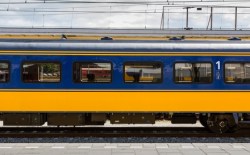
It’s the announcement that every commuter dreads – “We are sorry to announce that the train you had intended to get home has been delayed, and you will now spend the next ten minutes/three hours waiting expectantly on a platform, unsure whether it’s worth the risk to join the increasingly growing queue for a Costa, before you are instructed to make a hasty and unexpected platform change. Thanks for travelling with [insert name of train operator here]. You didn’t want to get home for anything important, did you?”
The fact one train has been cancelled and the next delayed means my day will culminate in a scrum of elbows and knees in the push to get on to the train as it finally chugs wearily into the station. Although about 20 people get out of the carriage, there are at least three times as many people wishing to board. Even once people have filtered into all the seats, all the way into the carriage and the aisle, there is barely room to stand, and faces are pressed against armpits, briefcases wedged into backs, and someone’s umbrella is pressing uncomfortably against my thigh. At least I hope it’s an umbrella.
Resigning myself to spending the next 20 minutes in a fug of damp overcoats, stale cigarette smoke and the 6pm sweats, I glance to my left and spot an oasis of calm and comfort. The soft yellow lighting of the first class carriage subtly beckons, the empty seats and clear, un-fusty air prove too much. Excuse me, I say to the general tangle of arms and phones and hair, and push my way through. It’s like emerging from the womb (I imagine), and taking my first few breaths of fresh air, free from the clagging amniotic fluids of the mass. Except, this brave new world into which I’ve stumbled doesn’t want me here. People’s bags (expensive rucksacks, the kind with the cross-laced elastic cords over the front, which no one ever uses) are more welcome on the seats than I am, and when I ask a man if I can sit down, I can tell from his frown, his hesitation, and the reverent way in which he reluctantly moves his bag on to the floor, that he is screaming out to check my ticket and see if I am entitled to be in this first class carriage of comfort.
The other passengers (all three of them in a carriage that seats sixteen) glance up from their newspapers. A man with his shoes off glances sympathetically at my neighbour, whose bag is now forced to suffer the lint of the carpet. One looks pointedly at the door to the driver’s cab, as though willing the conductor to burst through, so they can point and say, “This intruder has not paid to be here! Seize her at once!”
I begin to compose my response, should said conductor come through.
No, I do not have a first class ticket. It’s actually impossible to purchase a first class ticket for the 20 minute journey I am undertaking. I have instead got a standard class ticket, which I buy every day, and for which I am generally guaranteed one journey in which I will find a seat. My return journey sometimes affords me a seat, or a space in the luggage compartment, if the kids are off school, or if I travel later than usual. Not only is this train over-subscribed, dirty and cold, it is cut in half when it reaches Cambridge station, so that the remainder can chug back to London, earning more money, whilst the front half is stuffed full of people, who generally pay even more money than I do, for the privilege of getting home. People are forced to sit on floors, be propped against doors and walls, for an hour or more whilst those who schedule such trains sit in their cosy offices, before getting into their cars and driving home again.
If you don’t have time to purchase a ticket before getting on the train (due to the frequency with which the ticket machines break down, and the fact there are barely any ticket windows open) you are made to feel like a criminal as the conductor notes your name and address and applies a hefty fine. The trains are late, cancelled regularly, or (my personal favourite) lock their doors up to a minute before departure, leaving you fruitlessly pressing the button to open the carriage as it sits stationary on the platform, and the station attendant tells you it’s to improve punctuality. Mine, presumably.
I don’t mind taking the train. The last time I attempted to drive to work it took me two hours (it was snowing), and we have limited car parking space at work, which is afforded to those who come from further away. I appreciate that not all services can run on time, that there will always be incidents and delays, and accidents, both human and mechanical. I even understand there will be annual price hikes – nothing is getting cheaper.
What I do object to – strongly – is that whichever train you get on to, be it during rush hour or in the dead of night, for a short or long journey, there is always a first class compartment, and it is always nearly empty. Even when the rest of humanity has its face pressed against a steamed-up window, fold-up bikes tucked awkwardly into its groin, and babies dribbling down its neck, in some part of the train there will be a middle-aged man in a pinstripe suit with his shoes off, sipping a cup of coffee. In an outdated, archaic and elitist system that has no place in modern society, people in wheelchairs and with pushchairs have less space and fewer rights than someone with a fat wallet and the ability to throw their weight around. Tourists spending money and commuters supporting the economy are subjected to a shoddy, sporadic and uncertain service, for which they pay dearly. Granted, the first classers pay even more, but their compartments are never more than half-full, and surely cannot pay their way.
And the reason they get away with it is because the train companies know that on over-stuffed services, people without first class tickets will go and sit in the first class compartment, ready to argue the toss (I’m so ready), and so not only are the regular passengers getting screwed, but so too are the people who have paid a premium, because look – here’s a girl without a first class ticket sitting in a first class seat! There is not a single person on this train right now who is not pissed off!
The solution, obviously, is more frequent trains, bigger carriages, and better and more efficient planned routes. All this costs money, and perhaps it’s the exorbitant fares that those sitting in this carriage have paid that will bring about this change. But I can’t help thinking that if this carriage were to be changed into a regular one, with space for probably 30 people to sit down, and more to stand in comfort, there would be less of an issue. Everyone deserves a modicum of comfort (not to mention safety) when they’re travelling to and from work, regardless of how much they’re getting paid.
The ticket conductor didn’t come round. I think we were all disappointed. When I reached my stop I thanked the man next to me for so generously moving his bag – I actually meant it. For a first class compartment, it was really quite dusty. It’ll take his housekeeper ages to get it clean.
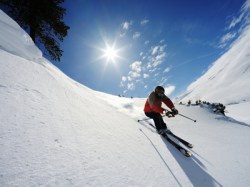
A couple of weeks ago Ben and I sat transfixed to the TV from six in the morning till nine at night, unpeeling our sleep-filled eyes to blink at the fluorescent-white slopes of the Winter Olympic slopes, and barely moving from the sofa in case we missed death-defying 1,000 degree spins, toe flips and back curls, becoming thoroughly dazzled by (and boringly knowledgeable about) triple toe flips and double batwings. In two weeks we consumed more telly than we had in the previous 12 months, and got a little teary-eyed when one of ‘our’ team done good and brought home a medal. Sochi fever hit headlines, twitter was a-blizzard with snow-filled hashtags, and BBC presenters got splendidly over-excited when we got within sniffing distance of a medal.
For a fortnight you simply couldn’t open a newspaper or switch on a social media account without being bombarded with tales of snowy derring-do, and we were united on public transport and in staff kitchen by patriotic heroism, and the intricacies of the curling hammer rule. The Winter Olympics rocked.
It was over far too quickly, but we were reassured that after a period of two weeks in which normal world events (war, famine, insane dictators and Dancing on Ice) resumed the headlines, our snowy fix could be sated again – with the Paralympics.
And so it began again on Friday evening, with Team GB celebrating its first medal on the first day. The medals run continued today, with Great Britain earning a gold and bronze in one event – the utterly amazing visually-impaired Super G, in which a guide skier, through the use of a Bluetooth headset, directs the partially sighted athlete down the hill – at 60mph.
If you don’t think that’s incredible enough, how about the monoski (or the ‘sitting’ ski, as it is referred to in rather subdued fashion) – in which a person straps themselves into a single ski, and goes hurtling down the same course. I’ll say that again – it’s a single ski. Which they sit on. It reminds me uncomfortably of a situation in which I found myself on last year’s ski trip, where upon seeing a group of my friends standing around chatting close to the bottom of a densely people-packed slope, I attempted to stop with what I thought would be a rather stylish swooshing manoeuvre. I managed instead to straddle a good friend of mine, sat on her snowboard. There was quite a bit of vertiginous mountain still in front of us, and snowboards are quite slippy things, and so I ended up sitting essentially on her head, skis akimbo, as we hurtled through the rapidly parting crowds to an undignified and really rather damp finish. Had I realised at the time that, in essence, this is what the Paralympians do, I may have had a better retort to the onlookers killing themselves with laughter.
Amazed by such feats, and by the heroic acts of bravery that got these athletes to the Games in the first place, I turned to the social media channels, the newspapers, TV news and radio, expecting similar amounts of joy and encouragement as had been experienced in February when the ‘real’ Games were on. To be disappointed. It’s like they’re not even happening. Admittedly, there has been some fairly headline-grabbing news going on recently, some not too far from where the Games are being held, but just hours after winning two medals I actually had to search the ‘sports’ pages of my preferred online newspaper (and had to scroll, unbelievably, past six separate stories about Arsenal) to find any news about it.
There’s blanket TV coverage up until 2.30 in the afternoon, but only a half-hour review show in the evening – and it’s on Channel 4. I’m sure I’m not the only person to have noticed, or indeed commented on, this fact, and I’m sure people were similarly outraged when the Summer Olympics were broadcast in the same fashion, with the ‘real’ games on the Beeb and the ‘other’ games relegated to Channel 4. And just why Sainsbury’s is the logical choice to sponsor it I couldn’t guess.
None of this would matter, of course, if the general sentiment around the Games was the same. The three presenters commentating on Jenny Jones’ bronze medal winning snowboard run were practically hyperventilating when she boarded into glory last month, and I think I saw her embarrassed reunion with her parents a dozen times in one day. But the commentary for our gold-winning run was staid, to say the least, and the review show is restrained and lacks the oomph that the big names of TV commentary (including everyone’s favourite auntie, Clare Balding) gave to the Games.
I want screaming! I want cheering! I want throat-catching teariness and over-sentimentality, I want Union Jack clad pensioners slipping over on the ice as they go to hug their medal-winning grandchildren.
There are over eleven million people with a limiting long-term illness, impairment or disability in Great Britain. These Games – like the Olympics in general – give people inspiration, encouragement and support, and help us believe we can rise to something better than the dismal commute, the job line or the queue for the checkout at Tesco. The Paralympic Games do not need to be relegated, as an after-thought; they should be celebrated and enthused about. It’s a time to point and stare – to say, wow, how does he do that, or how does she have the nerve…? It’s a time to explain to children that people are different, and that it’s not scary or wrong, and it’s not rude to talk about it. It’s time to cheer.
The good news is that the TV coverage given to this year’s games is a vast improvement on that of the past. The BBC gave Vancouver’s 2010 Games just one hour of coverage. One hour. A relatively brief curling match lasts longer than that! So let’s hashtag the sleet out of this final week of snowy winter fun, cheer on these amazing athletes, and show up the BBC for not buying the rights to the entire Olympics.
And my friend and I can rest assured that, out of those many dozens of people who watched us mono-head-ski past them a year ago in Chamonix, at least one will be impressed that we started the trend a year early. #GoTeamGB

I love movies. I like watching them, I like reading the scripts – and sometimes I do both at the same time. (Here’s a tip: don’t do this when you’re watching with someone else. For some reason they get annoyed when you read aloud the set direction, and aren’t interested in pausing whilst you catch up reading the omitted scenes.)
I like writing movies too. One day, I hope that one of my scripts will get made, and I’d truly love for some geeky film nerd to be sat on their sofa, reading my script and yelling indignantly that the director had cut out the really cute scene with the dog, or knowledgeably pointing out that, in the script, the main character should in fact be a brunette. Not the ridiculous bottle blonde the casting expert thought would be appropriate.
At this time of year, movies is all anyone’s talking about. It’s awards season, and tonight it’s the Big One – the Oscars. Although torrential rain is threatened in Hollywood (how rude!) that won’t stop thousands of fans lining the streets of Los Angeles, and over a billion people tuning in to see all the celebrities get soaked on their trip up the red carpet.
Except, only if they’re watching in America. Notwithstanding the crazy time difference (things don’t really get started until 2am), it’s virtually impossible to watch the Oscars outside of the States unless you pay a ridiculously over-priced satellite subscription, or are inclined to continually press the refresh button on an over-subscribed (and most likely illegal) online stream.
I don’t get it. We have a thriving film industry in the UK, and a huge movie-loving culture. Everyone loves film. But we only have one film review TV programme, showing 14 episodes a year, of 30 minutes each, broadcast at 11.30 at night on a secondary TV channel. We dedicate over 50 hours a year to watching an unfunny comedian passing unfunny judgement on unfunny home movies, yet only seven hours for reviewing the collective worldwide output of a multi-billion pound industry. And we completely ignore the main industry event – there isn’t even a review show.
Contrast this with sports, the Olympics, even music. I think it’s amazing that the BBC and other UK channels broadcast live from music festivals, music awards (even the Grammys were shown on 4Music), and on one night both the Brits and the Radio 2 Folk Awards could be experienced live. It’s really inspiring for young musicians, and, assisted by the myriad singing talent shows, really helps young people believe they could have a career in the music industry.
I just wish the same could be said with film. I’d happily stay up until four in the morning in order to watch the entire Academy Awards (especially in a year in which it’s guaranteed I’d get to perv at George Clooney, Leonardo di Caprio and Bradley Cooper). I’d love to watch a talent show in which young actors get a chance to compete for a place in a new TV show, or where script writers could be mercilessly booted off each week because their characters were two-dimensional or their dialogue hopelessly on the nose. Instead of a sing-off there’d be a dialogue duel – the remaining contestants feverishly scribbling the literary equivalent of a show-stopping high note or an acapella Grease medley. I’d call it the Write off.
Sadly I don’t think it’s ever going to happen. Instead I’ll content myself with reading a brief review in the Metro on the train tomorrow, or scrolling the Twitter feed over my cornflakes. For the record I think American hustle will bag most of the acting accolades, and 12 years a slave Best Picture. And if I ever want to actually see the Oscars live, I’ll just have to get myself an invitation. And, short of bagging myself a date with George Clooney (which seems unlikely), there’s only one way I’m going to get an invite. And maybe that should be what inspires me the most.

When we first bought Freya, in Holland in 2008, she had some fairly rudimentary systems. Lighting consisted of a dozen desk lamps strategically balanced on shelves, connected by daisy chains of extension leads. Heating was delivered in the form of a spacious but spectacularly inefficient coal stove, which managed to heat the air space six feet directly above the chimney to furnace like temperatures, whilst leaving the rest of the boat with frost on the windows.
Water was stored in a barrel.
Over time, we have slowly but surely worked to make these systems better. We now have full electric lighting (with switches and everything) in the bedroom, and if the weather’s not too cold, and the coal is just right, and the month doesn’t have an R in it, we can just about wake up in the morning without first cracking the ice off the faces of our watches.
The water situation is still… problematic. One barrel has since turned into four, connected by an intricate system of pumps and pipes, but it still only contains 800 litres, meaning it needs regular refilling. The water tends to run out at any one of the following times:
- 11 o’clock at night when you’re brushing your teeth and it’s snowing.
- Six in the morning, just after you’ve applied the shampoo.
- During a cooking emergency, when the only thing that will save the boat from immediate incineration is a swiftly applied gallon of water.
Filling the water tanks is one of the less fun chores in winter, involving a trudge up the muddy bank to the water point, unfurling an iced-up hose, and running this down to the bow of the boat, whereupon it is fed into the front hatch. You then need to scramble into the front cabin (a midget would find it cosy) and fumble around in the rusty, musty dark, to insert the hose into the tank. You are then required to go back outside, turn on the tap, and wait forty minutes for the tank to fill.
Probably the most important step in this process is then to turn it off. Failure to carry out this step results in an admittedly slow, but spectacularly persistent method of destroying your boat. There are no ball valves, alarms or overflows. The water goes straight over the top and directly into the bilge.
It was whilst Ben was enjoying his third pint at the pub that he discovered his error – in the form of me phoning and asking him if there was anything he meant to do upon leaving the boat an hour earlier.
“Oh bother,” was his reply.
Ok, those weren’t his exact words, but I’ll also admit that my polite enquiry wasn’t actually so polite. It wasn’t just my sarcasm that was dripping, but also my clothes, hair – anything that came within the vicinity of the bulging plastic tank, spouting hose, and rapidly filling bilge.
I’m a bit of a drama queen – it wasn’t that bad (although I did have to change my socks). But it did occur to me (in vivid, dripping detail) what would have happened if I’d gone with my beloved to the pub. There we’d be, knocking back our snakebite and blacks without a care in the world, looking at the big screen tv and feeling sorry for those poor bastards in Wales whose houses are being swept away in the storms, blissfully unaware that a mini manmade climate change was taking place in our own home, only in reverse. Good job I’d been left at home, and decided to wander into the bedroom for reasons now forgotten, to hear the peculiar, and alarming, sound of a babbling brook beneath my feet. A few more inches (granted, it would have taken hours) and the water would be gently lapping over the floorboards.
Enough telling off. Ben has had more than his fair share of punishment by spending the entire next day up to his armpits in bilge pumps, grease, and 1500 litres (as a conservative estimate) of icy scummy water. He’s not convinced the pint was worth it.
Of course, we’re now in ‘never again’ mode, and lengthy discussions have been had concerning ball valves, hose releases and water gauges… I sense the imminent arrival of a weighty package from screwfix. I only hope that when we finally plumb in the all-singing, all-dancing purpose-built water tanks, there is some contraption incorporated that will warn us when the tanks are getting empty, as well as full, so that I won’t ever again have to go to work in a hat to hide the dried-in shampoo. It’s happened more than once!
The boat is still a work in progress. The portholes leak and mould grows where it shouldn’t. I have a yearly rant as to why coal manufacturers can’t package their products in bags that weigh less than a human corpse, and why the local rowing team are allergic to daylight and must carry out their training in the pre-dawn hours of a Sunday morning.
But for all the dramas, the bumps in the night, the absurd amount of diesel one engine can use to propel itself forward at four miles an hour, I’m still the proud owner of a 107 year old floating (for now at least) home. I may just need to invest in some wellies.
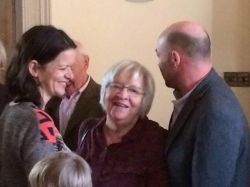
Yesterday we gave my mum a surprise 70th birthday party. The biggest surprise is that she wasn’t 70. A sprightly 69-year-old, I decided to surprise her a year early.
We have a pretty large extended family. Five brothers and sisters produced between them 13 offspring, who in turn (with no contribution from me) have since multiplied into 15 (and counting) third generation sproglets, significantly adding to the total number of babies in my Facebook feed, and helping keep several stationery shops in the greater Leicestershire area in business.
When you have this many people all sharing a tiny bit of genetic code, it’s very rare for them to be in the same place, together at the same time. Mum mused a while ago that it would be nice if we all got together, and decided she should do something for her 70th birthday. Well, that seemed like an awfully long way off, so I decided to bring the idea forward a year early, and set about ringing and emailing the cousins, aunties and uncles I hadn’t seen in decades, as well as friends near and far. To my surprise (although I shouldn’t have been really) every single person said yes. My excel spreadsheet grew and grew, until I had clocked up more guests than Mum had years. It soon became clear this party wouldn’t be held on the boat!
A nice hotel, menu and wine chosen, the only remaining job was to not let the secret slip. For six months. It’s been hell.
I’m usually quite good at secrets, keeping mum (so to speak) not generally being a problem. But for someone not given to remembering names and dates of birth, I was a veritable mastermind on the various doings of the Harrison clan (through regular and sneaky contact on Skype and email). So I would often be halfway through telling my mum something I would clearly otherwise not know, to her look of increasing incredulity. “I um, saw it on Facebook”, I’d say lamely.
The worst bit was thinking of what to say we were doing for her birthday. Ordinarily it might have been lunch at a pub, or dinner in Cambridge, but somehow we had to make it seem normal and logical that we’d chosen a hotel 40 miles away. And that her sister was going to be there. And that the hotel had insisted on us coming at 2.15 (no earlier!) for our afternoon tea. It all got rather wearing.
Most of the day before was spent anxiously checking my spreadsheet for the millionth time to ensure I hadn’t forgotten anyone. Disaster nearly occurred the previous evening when I realised Mum’s next door neighbours were somehow missing from my final acceptance list – a not altogether unsurprising turn of events given that I’d never invited them.
But that was the only hitch to an otherwise master-minded plan. Given the time of year, we could quite easily have been six feet deep in snow and unable to get to the venue, and given my relatively unexplored baking talents the boat could well have ended up wall to wall in 70% chocolate ganache during my attempts at a birthday cake.
My only real worry was how she would react on the day, expecting a table of 15, and instead being faced with 75 relatives and friends, most likely yelling at her as soon as she entered the room. My fears were groundless. Admittedly her first words were “Oh no, you haven’t”, but then a big smile emerged as – oh yes, we had – people flocked around her. She was in her element, chatting away to sixth cousins five times removed, reminiscing about who had married whom and in what dress whilst playing Jenga with small children and deftly balancing scone and fizz on the head of a grand-niece. Pure class.
The husband occupied his time loitering around the buffet table, and cursing the fact we didn’t have time to write a cheat sheet, with names and faces, so that he didn’t have to reach blindly for a suitable name – Harriet! Mary! Juliet! – every time a female relative approached.
Amazingly, we avoided the plethora of smutty jokes that I thought would surround the day, given my mum’s age. One relative, who shall remain nameless for the sake of his reputation, said he had the date earmarked in his diary as ‘1 Feb: 69 with Auntie Mo’. I just hope he wasn’t disappointed.
The day was concluded beautifully by my rather sozzled little brother, who, so inspired by this gathering of nearest and dearest, and trying to think of the next time we might all do it again, suggested that he might get married soon, in order for that to happen. A wise uncle counselled that he might like to find a girlfriend first.
Mum is still dumbfounded as to how we managed to organise it all, in particular how I managed to contact all the friends and relatives. I have advised her to change her email password to something less guessable.
To anybody who is reading this who helped make the day so special – a heartfelt thanks. And to my lovely mum, I promise not to spring any surprises on you this time next year when you actually turn 70. Honest. X

It is an age-old philosophical question: if a tree falls in a forest, and no one is around to hear it, does it make a sound?
One thing is for sure; although there was no one within a mile’s earshot when the Dyerville Giant toppled in a storm in March 1991, the nearest neighbour thought he’d heard a train wreck. At 360 feet tall, and weighing an estimated 450 tonnes, the 1,600 year old redwood was the oldest and biggest in the Humboldt forest, Oregon, when it crashed to the ground, and the enormous impact it made on its surroundings can still be seen 20 years on. Stretching in a 40 mile strip from southern Oregon to southern Monterey county in California, the Coast Redwood can survive flood and fire, and centuries of history, supporting countless species and an ecosystem unrivalled in fecundity anywhere in the world. But, eventually and inevitably, even these majestic creatures must come to an end. And thankfully there’s no shortage of others to take their place.
It is on a damp fog-filled January morning that we find ourselves, necks craned, staring up at these gravity-defying behemoths, struggling to take in their enormity, barely able to see the top of the canopy. You literally cannot see the wood for the trees as each giant competes for space, shoots and burrs twisting off at odd angles, struggling for survival.
Ever since he was a child and given a picture book on the natural wonders of the world, my husband has hankered to see these trees – and one in particular. Thankfully, not the one that fell, but the Chandelier (or ‘drive-thru’) Tree, so called because of its unusual outstretched branches, and made famous by the six by nine foot hole carved through the middle, through which countless vehicles have been driven – and got stuck in – since the 1940s when an enterprising local decided to turn the majestic giant into a tourist attraction, as if it wasn’t already spectacle enough.
Remarkably, losing half its base has done the tree no harm at all, and it’s still going strong, scraping paint off wing mirrors and bumpers over 70 years later. The image inspired our 2,000 mile road trip from California to Washington State, to see these amazing trees, in the temperate rainforest of Oregon. We’ve crossed desert and highway, beach and city, thankful we chose the west coast of this vast nation as the rest of the country is gripped in a sub-zero polar vortex whilst we’ve been sunning ourselves in shorts and t-shirts.
Not that our vehicle will go through the tree. We’ve hired a 12 foot tall, 25 foot long motorhome for the journey, and I’m not sure I would be confident in taking any American car through the well-chiselled gap, and sympathise with those sweating drivers who do, urged on by grinning onlookers, ready with video camera and a gleeful smile when it all goes inevitable.
The Chandelier Tree is impressive, a giant standing regal in its own clearing, dwarfing (from the top of its own micro-climate) everything in its surroundings. But it’s actually when you see several together (even when they’re smaller) that you truly appreciate the wonder of these millennial old trees. Jostling for space and sunlight, roots intertwined and a million species relying on them for survival, these communities of trees depend upon each other, and when one goes, often a domino effect is produced – as happened with the Dyerville, which was the third to fall in a week of waterlogged weather.
But a tree falling doesn’t mark its demise – merely a change in function – as the ‘logs’ as they are then known provide a nursery for other species for up to four centuries before finally rotting into the forest floor. Space to breathe is provided for the lesser, almost dormant, surrounding trees, in order for more giants to emerge. The overall effect is one of a harmonious, peaceful existence, through centuries of history. And as long as they’re protected from that most dangerous species, humans, they’re apt to stick around for another 2,000 years.
These trees owe their longevity in no small way to a group of pioneering men who in 1917 formed a protective league to guard the forests against the loggers who were clearing vast swathes of the countryside. Their foresight is the reason we, and hundreds of thousands of other travellers, come here each year, to experience a feeling of insignificance unrivalled by any other natural phenomena, and to marvel at how amazing nature can be, if left undisturbed.
The rainforest isn’t the only amazing sight we’ve seen on this trip. Having picked up our motorhome in San Diego, and quickly realised that driving downtown was no fun at all, we decided to head away from the coast, and the sprawling urban mass that is Los Angeles, and head into the Mojave Desert, destination Joshua Tree. The vast empty space we found was not done justice by the map – in comparison to Death Valley, Yosemite and Yellowstone, this national park is tiny, but still takes a day to drive through, and considerably more when you’re given to gawp, window rolled down for pictures, at every turn in the road. The Joshua Tree is a hardy plant, ludicrously sharp to the touch, surviving on millimetres of water each year, and quite unlike any other cacti or bush. You don’t see them until you get into the northernmost reaches of the park, but as soon as you spot the first, they’re everywhere. If you’re here on a U2 pilgrimage (the band’s fifth album cover featured a tree and was named after it) you won’t Find What You’re Looking For – the tree itself has since collapsed, and was in any event located 200 miles further north, in Death Valley.
But that’s of little consequence. As with the rainforest, it’s the trees that are the star of the show, and the vast, virtually uninhabited environment they survive in. Not able to camp in one of the dozen or so full-up camping grounds in the actual park, we headed beyond the strip mall that is the town itself to a place the park rangers informed us was designated as an ‘overflow’ for ill-prepared RV’ers such as ourselves. If we’d expected a car park, we were amazed to find a desert, literally – the asphalt gives way to a dirt track, the telegraph poles stop, a solar farm is the only landmark for miles but the street sign says ‘Sunflower Road’ and it is here, amongst brush and bush, that the helpful town planners allow us to park – for as long as we want, presumably – without being bothered. As night falls we are joined (at a respectable distance) by three other campervans, but otherwise our view of mile upon mile of deserty scrub is uninhibited, and when I wake at three in the morning it is probably because my ears aren’t used to such silence. As with the redwoods, this is nature played out in XXL, and normal rules don’t apply.
Throughout the trip, the same pattern keeps on recurring – cities, highways, are all just bigger. There also seems to be more time. In this wide open space it’s easy to sit back and reflect, to admire all that’s before you, and imagine how little must have changed to the landscape over the centuries. Each day we pack up the camper and set off anew, ready for whatever bigger and better adventure is ahead. Our end destination is Seattle, and to get to which we must drive through the industrial town of Rainier, a logging port, and it is here that our tree-themed journey takes a different turn, and we see exactly the extent to which times have changed from the isolated and protected pockets of the country we have experienced in forest and desert.
America is big, and to sustain its growth, it needs materials. We drive past mile after mile of log mountains, chippings, sheets and boards. Ships wait patiently as their gunnels sag under the weight of their gigantic loads, and overalled men in machinery efficiently process this vast industry, on its way to make buildings and paper. Nature has its place, but the life it sustains has its cost, and although these trees are farmed for the purpose, the sight is sobering.
Whether or not the great Dyerville made a sound when it fell, its legacy lives on, and in death as well as life it continues to inspire.
Whether these natural wonders of the world will continue to be here in another thousand years or more is not for us to know. If our relentless pursuit of bigger and better continues, the biggest and best parts of the world may start to suffer. But hopefully there will continue to be groups of people (even just tourists like ourselves) who feel compelled to halt progress, protect their environments, and ensure these amazing landscapes stay on the map for years to come. That’s perhaps the biggest – and best – challenge of all.

Me: “Morning Stomach. How you doing today?”
Stomach: “Oh god, really – it’s that time again?”
Me: “I’m afraid so.”
Stomach: “What do you have for me?”
Me: “I’m thinking some form of griddled bread product, topped with processed meat, doused in a modified corn syrup and washed down with a good litre of coffee. How’s that sound?”
Stomach: “It sounds like yesterday.”
Me: “You’re right. It’s been too long. Get ready.”
My stomach and I are currently engaged in a battle of wills. I’m breaking long-established patterns of digestive behaviour, attempting to redefine meal parameters and portion sizes, and acceptable times at which to ingest these meals. Normal rules don’t apply when on holiday, but my stomach is confused, unhappy, rebelling.
My food intake for today, for example, has been particularly puzzling. My fast was not broken until ten past midday with, oddly, a (delicious) plate of lobster eggs benedict. Starting the day with fish is not the norm for me, and nor is lunch being replaced with half a pack of haribo gummy bears, but we were stuck on a busy stretch of highway coming out of Santa Cruz, and there was nothing else to hand. The day’s culinary events were concluded with a microwaved pizza – too late we realised that the as-advertised convection oven in our camper was merely a microwave, and so a disappointingly-moist bottomed pepperoni pizza was consumed, in silence, straight from the slightly sweaty glass turntable of the oven. The highs and lows of eating, USA-style.
Since arriving in the States ten days ago my digestive system has been subjected to a whole new world of cuisine, some of it gourmet; others less so.
Oysters at the Hilton in San Diego marked a highlight. Pecan ‘flapjack’ pancakes at Richard Walker’s pancake house in downtown were another win. Lemon meringue pie from Cambria, and the afore-mentioned lobster eggs benedict at Carmel have been other notable delights, the calibre (if not the timing or sizing) of which have been first class.
However, there have been some significant low points.
Eggs, ready whipped, from a carton. Microwaved pizza. A questionable (if inventive) dinner of leftover spag bol, turkey slices, ‘fiesta mix’ cheese and croutons.
These latter culinary delights have all been prepared by my own fair hand in our camper van, utilising the microwave oven, burner, limited cooking utensils and non-non-stick pans. Eating well is very easy to do in the States – as long as you go out to do it.
It’s our own fault really. A three-week holiday has us maxed out to our limit, and so eating out every day just isn’t tenable, especially when you choose one of the most expensive states in the country to travel around. The food is great, the portions huge, and I suppose if we were sensible we could share one main course instead of ordering two huge platters of food, leading to lengthy periods sat staring in a stupefied daze in the roomy armchairs of the RV, saying “I shouldn’t have eaten that”. But we’re still on menu-amazement mode, where choosing one thing each is hard enough, let alone something to share.
So we’re limiting ourselves to one meal out, one meal in, which means long, protracted tours around giant supermarkets, attempting to choose foods constituting a balanced diet, that can be cooked in the limited facilities available, and that perhaps contain a few ingredients that haven’t first been blended, frozen, dehydrated and formed into patties (a surprising amount of food comes in patty form over here).
Also, we have to choose products that we will be able to finish within a week, when we hand over the RV keys in Seattle. Although the 1.5 litre tankard of Jim Beam is a very reasonable price, and comes in a very cool bottle, it is frankly irresponsible for us to buy it, knowing it would involve at least five very drunken nights in the next seven. I wanted to buy some traditional chocolate chip cookies today, the chewy, chocolate-loaded ones you always see characters munching their way through in chick flicks. They had a great selection – but, did I want them in a 24 or 36 pack?
The frozen lasagnes (or lasagnas as they would have them spelt) feed 12 at a minimum. Milk comes in gallons, and a family-sized pizza could double up as a spare car tyre. If I don’t return to the UK at least half a stone heavier I’ll have been doing something wrong.
And it’s easy to keep track of how much you’re consuming. The menus on the wall in McDonald’s display the calorific content of each of the burgers in larger print than the prices. The five different grades of milk (no fat, 1%, 2%, soy and full fat) come in separate fridges.
Of course, over-eating is part of the whole holiday experience. I only ate three of the six pecan pancakes I was given the other day (plus a jug of maple syrup and a curious confection they call whipped butter, which frankly should be served with everything), but I would have been disappointed if I’d only received three in the first place. Exclaiming “wow!” at first sight of the tray of food you’re offered is one of the pleasures of eating out, as is the wry, shame-faced grin you adopt as the waitress collects your still-third-full plate half an hour later. It, and the constant stream of tea and coffee, certainly make the cheque easier to swallow.
Generally, Ben and I don’t really eat breakfast, but it’s now become our favourite meal of the day, appearing in some battered and griddled form, its chief constituents being eggs and pourable sugar. Sometimes it involves fresh berries, usually it has some sort of processed meat, except for today when the liberally-hollandaise-doused eggs were topped with juicy chunks of lobster, a decadence that perhaps went a little far, even by our standards.
How long we’ll be able to keep this up is anyone’s guess. We’re now coming into the part of the coast famed for its seafood (or at least, its ability to source seafood from Alaska, as the majority of its waters are over-fished and empty), and so I can’t see our eating habits getting back to anything like normal until we return to the UK. And perhaps by then my stomach will have expanded so that normal, England-sized meals just won’t fill the void. We’ll have to wait and see.
Stomach, I’ll keep you apprised of events…
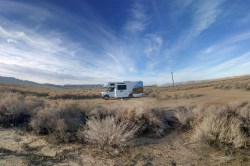
Two days ago we took delivery of our motorhome – the vehicle that is to be our mode of transport and accommodation for the next two weeks, and to deliver us through three states to our final destination, Seattle. It’s BIG. Everything’s big over here – the pancakes, the parks, the people. But especially the cars, and at 12 foot tall, 10 feet wide, and a frankly ridiculous 25 feet long, our des res on wheels is a monster. So far I’ve counted 23 cupboards, and lost my hair straighteners, moisturizer and at least one pair of shoes ten minutes after unpacking them. It has seven seats and three beds – for two people – and the wing mirrors are bigger than the main mirror I have on my wall at home. And it’s only the medium-sized model.
However, despite such luxuries, I have so far not been a very happy camper. On New Year’s Eve I came down with a cold the like of which I have never experienced before – a woman-flu of biblical proportions – which has seen me deplete the van’s stores of toilet roll within 24 hours, and accrue a working knowledge of California’s over-the-counter cough and cold remedies in the same period of time. (In short, none of them work, all predict swift and terminal liver failure if you dare to actually take them, and attempting to purchase them along with a quarter bottle of Jack Daniels will lead to even tougher questions than those experienced at Immigration.)
What started as an itchy nose and sore throat (which I attributed to the flight) and an inability to sleep (jetlag and holiday excitement?), has since turned into major tissue fest, featuring such delightful symptoms as hacking cough and continually weeping right eye, pounding headache and malfunctioning nose, to create a compendium of snorts, wheezes, grunts and splutters – my facial region is experiencing not so much congestion; more like full-on car crash.
Of course, I’m dealing with all this admirably, with great humour and grace, barely mentioning each new symptom that presents itself, chortling over the fact I’ve not had a cold or a holiday in 18 months, and the amusing coincidence that the two should conspire to occur at the same time, and greatly sympathising with the sickly taxi driver who decided to bring her cold with her to work when she picked us up from the airport.
None of my symptoms were made any better by a 50 dollar cab ride to pick up the van, and a 90 minute shop for supplies around a WalMart so huge it had its own micro climate.
To take my mind off this sorry state of affairs we have been driving through the most amazing and spectacular scenery, and spent our first night parked up just outside Joshua Tree National Park, in the Mojave desert. Named by the Mormons, and made famous by Bono, the joshua tree is a crazily spindly-sharp weapon of a tree, part of the agave family, and prolific in this 800,000 acre park, strewn with granite boulders the size of buildings, ferns and cacti, and apparently rattlesnakes, although the fact my snorts and gurgles announce my presence a good 30 seconds before I arrive make my chances of stumbling across one pretty slim.
Today has seen us navigate 50-mile long stretches of highway in a perfect straight line, visit a ‘ghost town’ that seemed plenty alive with tourists, and complete the day’s journey as the setting sun turned the mountain-edged valley we drove through a deep rust-gold.
The azure-blue skies and high-20s temperatures have been keeping us smiling (as much as my cracked lips allow – am I overdoing this whole ‘I have a cold, please feel sorry for me’ bit?), with the promise of more to come as we head north to Death Valley tomorrow (which seems appropriate – alright, I’ll stop), before heading back to the coast for more Californian fun-in-the-sun after the weekend.
Thankfully, Ben has not yet come down with my lurgy. I think it might be the American Marlboros that he is chain-smoking that are doing the trick, as my germs have nothing on those toxins. Plus, if he gets sick, he knows I’ll have to drive the van, which is probably more than either of our nervous systems could bear.
Hopefully in a day or two I’ll be a bit better and ready for the next stage of our journey – 1,000 miles of pacific coastal highway. Should give me enough time to find my straighteners.

This blog is coming to you from 38,000 feet. It’s a mile high and a little scared of flying. It may emit involuntary whimpers of terror, digress into meaningless tangents, and make little or no sense. In fact, it’s much like any other blog, but at least this time it has an excuse.
Day One of our USA roadtrip couldn’t have got off to a better start. Ben and I somehow managed to blag ourselves a free upgrade into Business Class on an overcrowded BA flight. We had been unable to check in online due to a website error and so were dismayed to learn we had been allocated seats five rows apart. (Note – I was dismayed. I rely on Ben’s shoulder to blub into, and hand to crush, during take-off, landing, and various indeterminate points during the flight, so the thought of him not being within grabbing distance was disconcerting. Ben looked quite cheerful.) I think it was the pathetic sight of us trying to split a pack of fruit pastilles in half that made them take pity on us, and so we find ourselves guided into armchair-sized seats, one facing forwards, one back, and glasses of fizz forcibly shoved in our hands.
I’m now reclining at 45 degrees, feet propped on a footstool, whilst a very nice air steward (in his 50s, keeps winking at me) plies me with Taittinger and peanuts, to the extent that I almost forget we’ve taken off and are somewhere over the Irish sea. To be honest, I’d be quite happy to spend the next eleven hours taxi-ing around the airport, being fed Shetland orange-cured gravadlax and sirloin steak, then go home. It seems like a bonus that we’re going on holiday too.
Two hours in…
Well and truly sozzled. Fizz turned to kir Royale, and then dinner arrived with four different types of wine to choose from, followed by a 15 year old drambuie and possibly more fizz – things got a little blurry at this point. I’m only glad I can blame my slightly staggered walk to the loo on the turbulence.
Three hours in…
The new Alan Partridge film is quite funny. But that might be the Taittinger talking.
Four hours in…
Fully reclined. Oh God…
Four and a half hours in…
I’m ruined for life. Damn you BA. Thanks to your ‘Involuntary upgrade’ I will no longer be able to fly cattle class on Ryan Air, knees hunched into sick bags and in-flight magazines, being stared at by the weird kid in the seat in front of me, trying to pretend like I don’t want to kill everyone within breathing distance. I have just checked how much these flights cost, and am wondering how much I can sell a kidney for. Ruined.
Five hours in…
Back to 45 degrees. Maybe I just don’t like enjoying myself, but lying horizontally just felt weird, and sleeping through a £300 an hour flight just seems wasteful. Those bottles of Taittinger aren’t going to empty themselves.
Six or seven hours… Who’s counting?
The business class toilet is never occupied, and has never-ending supplies of toilet roll. And hand cream. The mirror doesn’t show up my silver hairs and for this reason alone is worth the ticket price. It seems insanely immoral to have four toilets between 80 people (rather than the same amount between 200) so to alleviate my guilt I’m using it lots.
Somewhere over Canada…
I’m composing my thank you tweet to BA, to be twittered the moment we land and can find some wifi. Gravadlax and Taittinger are quite long words however, and I have limited wordcount. It seems a shame to shorten them to fish and fizz. My tweet needs to be humble and sincere, yet convey the sheer awesomeness that is Life Behind the Blue Curtain. I want it to appeal to BA’s marketeers, thus earning me a retweet, yet not appear too brown-nosing, as though my intention is to secure an upgrade for our return trip. That’s not my reasoning at all. Oh no.
Maine? Looks snowy.
After much debate my tweet reads as follows:
“Huge thanks to the amazing BA for our upgrade to business class this afternoon. Our booking ref is zxhj12. Just sayin’.”
I’ve never been one for subtlety.
Two hours to go…
I’ve just realised I’ve spent the last half hour hunched in my seat, footstool in the upright position. I’m not cut out for this type of luxury.
Preparing for landing…
Lovely shiny plane, I shall miss you. I’ve enjoyed your hospitable staff, your feather pillows, your afternoon tea and metal cutlery, your fully reclining seats, hot towels and intoxicating beverages. In fact, this is the most luxurious hangover I’ve ever had. I have been dreading this journey ever since we booked our trip, but it’s been a pleasure. Until next time (and on occasion of us winning the lottery) …
 alexjanedavies